


RAPOO VT7 vs VT7 MAX: Quick Answer

RAPOO VT7 and VT7 MAX share the same large 127 × 64 × 40 mm shell, the same ~53 g weight class, the same 800 mAh battery, the same NORDIC 54L15 MCU, and the same up-to-8K wired/2.4GHz platform, so their core shape and overall usage feel stay very close.
The real upgrade in VT7 MAX is not the body design, but the internal hardware package: it moves to a PAW3950 Ultimate sensor, optical switches, a lower LOD adjustment range, and glass-surface tracking support, while VT7 stays with the PAW3398 sensor and mechanical switches.
For many users, that makes VT7 the better value choice, while VT7 MAX is the better fit for players who specifically want the higher-end sensor tier, lower LOD tuning, and more flexibility on different surfaces.
What Stays the Same
Same Shape and Size
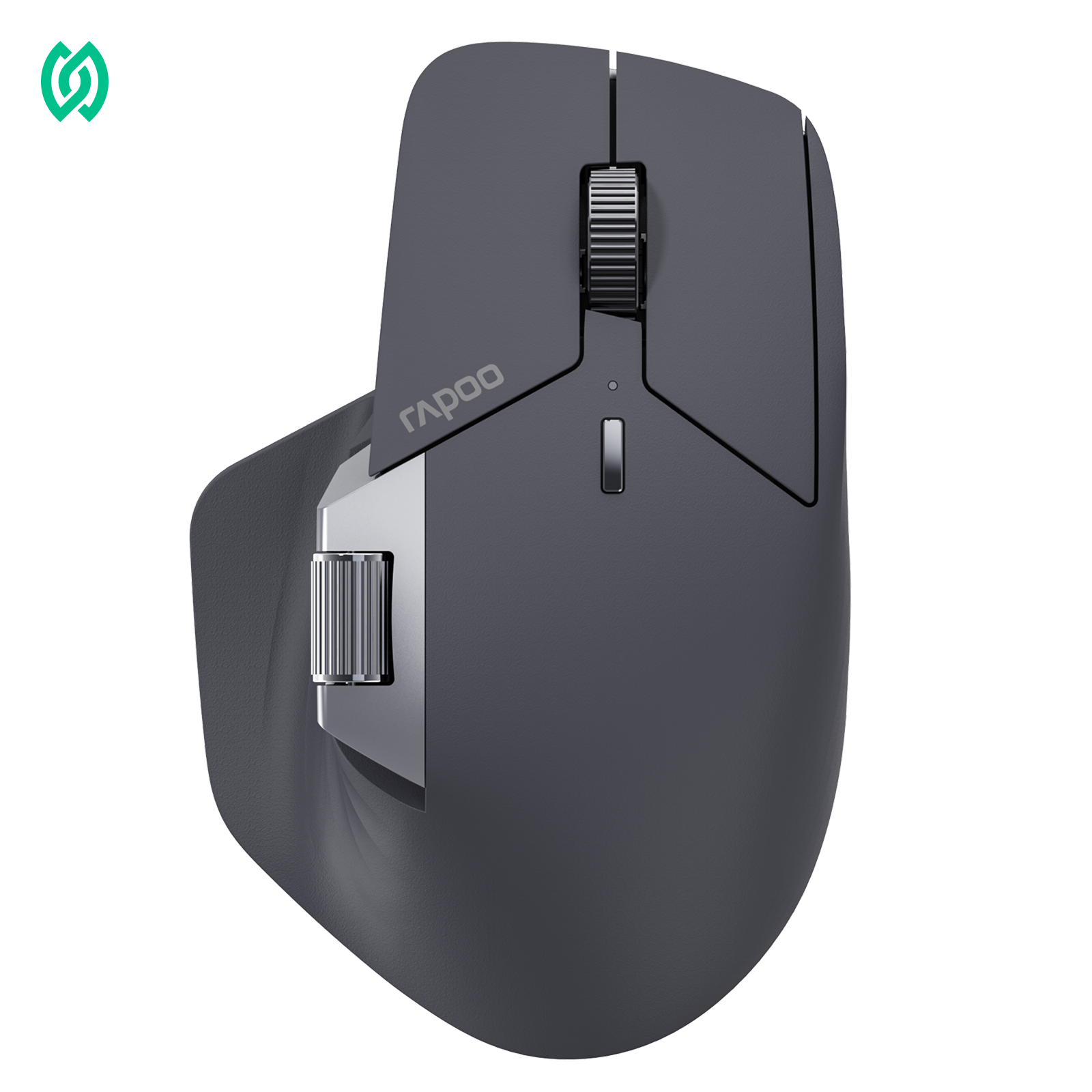
RAPOO VT7 and VT7 MAX use the same 127 × 64 × 40 mm shell, so the core hand feel does not really change between the two models. Both sit in the same large-size class and keep the same symmetrical body structure, which makes this comparison less about shape preference and more about internal hardware differences.

That also means if you already know you like this body style, moving from VT7 to VT7 MAX will not give you a new shape experience. The main reason to move up is not comfort or dimensions, but the upgraded sensor and switch package inside the same shell.
Same Weight Class and Battery
Both mice target the same lightweight class at about 53 g and both use an 800 mAh battery, so there is no meaningful separation here in terms of portability or overall battery capacity. In other words, VT7 MAX does not become a heavier or less practical mouse just because it uses a higher-tier internal setup.
Before the VT7 Gen-2 series was officially released, we tested both the VT7 and VT7 MAX under different polling-rate settings. In our internal battery tests, both models delivered up to 750 hours at 1000 Hz, 550 hours at 2000 Hz, 150 hours at 4000 Hz, and 120 hours at 8000 Hz. Because the two mice share the same 800 mAh battery platform, their battery positioning stays very close, while real-world runtime will still vary depending on polling rate, usage habits, and performance settings.
Same Core Platform
At the platform level, VT7 and VT7 MAX are built on the same foundation. Both use the NORDIC 54L15 MCU, both support wired and 2.4 GHz wireless connection, and both are positioned as native up-to-8K gaming mice rather than two fundamentally different product tiers.
They also keep the same overall control structure, including 10 programmable buttons and A Hub software support. That is why this comparison is best understood as a same-platform decision: the shell, battery, and core wireless architecture stay very close, while the real upgrade path starts with the sensor, switch type, and tuning range.
The Real Differences Between VT7 and VT7 MAX
| Specification | VT7 Gen-2 | VT7 MAX Gen-2 | Difference |
|---|---|---|---|
| Sensor | PixArt PAW3398 | PixArt PAW3950 Ultimate | VT7 MAX uses a higher-tier sensor |
| Max DPI | 26,000 | 45,000 | VT7 MAX offers a higher DPI ceiling |
| Max Tracking Speed | 650 IPS | 750 IPS | VT7 MAX supports faster tracking speed |
| Switch Type | Omron Mechanical Switch | Rapoo Custom Optical Switch | VT7 uses mechanical switches, while VT7 MAX uses optical switches |
| Switch Durability | 100 million clicks | 120 million clicks | VT7 MAX has a higher rated switch lifespan |
| Lift-Off Distance (LOD) | 1.0–2.0 mm | 0.7–1.7 mm |
Sensor: PAW3398 vs PAW3950 Ultimate

The biggest hardware difference between RAPOO VT7 and VT7 MAX starts with the sensor. VT7 uses the PixArt PAW3398, which is positioned as a high-performance customized solution in the 3395-class range, while VT7 MAX moves up to the PixArt PAW3950 Ultimate for a higher-end sensor package.
On paper, VT7 MAX clearly has the higher ceiling. It pushes further in maximum DPI and tracking speed, which makes it the more advanced option for users who care about top-end sensor specifications and finer tuning headroom. VT7, however, is still far from entry-level. It already delivers the kind of performance that is more than enough for most competitive gaming scenarios, especially when paired with the same lightweight shell and up-to-8K platform.
That is why this difference should be understood as an upgrade in performance ceiling rather than a complete change in everyday experience. If you mainly care about shape, weight, and strong core gaming performance, VT7 already covers that well. VT7 MAX is the better fit for users who specifically want the stronger sensor tier and the extra room for high-end tuning.
Recommended reading: PAW3395 vs PAW3950: What’s the Real Difference
Switches: Mechanical vs Optical
The second major difference is switch technology. VT7 uses 100-million-click mechanical switches, while VT7 MAX upgrades to 120-million-click optical switches. This is not just a spec change on paper. It can also affect click feel, long-term consistency, and the way the mouse handles debounce-related behavior.
Mechanical switches are still familiar and widely trusted, and many players already like the tactile response they provide. VT7 keeps that traditional mechanical feel while still offering a high durability rating. For users who prefer a more classic click structure, that can actually be a positive rather than a limitation.
VT7 MAX, by contrast, is built for users who want optical switch behavior. Optical switches are designed around light-based actuation rather than metal-contact triggering, which helps deliver cleaner signal recognition and a more stable long-term response profile. So the upgrade here is not just about saying VT7 MAX is “faster.” It is more accurate to say that VT7 MAX offers a higher-end switch solution with advantages in reliability, response consistency, and reduced concern around traditional debounce-related issues.
Recommended reading: Optical vs Mechanical Mouse Switches
LOD and Surface Flexibility
VT7 and VT7 MAX also differ in lift-off distance tuning and surface adaptability. VT7 supports a 1.0–2.0 mm LOD range, while VT7 MAX lowers that range to 0.7–1.7 mm. That gives VT7 MAX more room for users who prefer a lower lift-off setting, especially in fast FPS play where repeated lift-and-reset movements are common.
For players who frequently reposition the mouse, a lower LOD can help reduce unwanted cursor movement when the mouse is lifted off the pad. That does not mean everyone will immediately feel a dramatic difference, but for users who are sensitive to lift behavior, VT7 MAX gives more precise adjustment headroom.
VT7 MAX also adds glass-surface tracking support, which gives it more flexibility on difficult or less traditional surfaces. This matters most for users who sometimes game or work on glass desks, glossy tabletops, or mixed setups where mousepad conditions are not always ideal. VT7 remains the better-value choice for standard mousepad use, while VT7 MAX is the more flexible option for users who want lower LOD tuning and broader surface compatibility.
Does VT7 MAX Actually Feel Better in Real Gaming?
Where Most Players Will Notice Little Difference
For most players, VT7 and VT7 MAX will feel very similar at the most important level because they share the same shell, the same size, the same lightweight class, and the same core 8K platform. If your experience is mainly shaped by grip comfort, movement balance, and general control, the jump from VT7 to VT7 MAX does not suddenly create a completely different mouse in hand.
That is especially true in actual gameplay. Since both models are built around the same 127 × 64 × 40 mm body and the same general weight target, the overall shell control stays very close. For many users, that means the biggest part of the gaming feel still comes from the shape itself rather than from the sensor tier alone.
Where Advanced Users May Notice the Upgrade
VT7 MAX becomes more meaningful for users who are more sensitive to tuning details. Players who prefer a lower lift-off distance, use frequent lift-and-reset movements in FPS games, or want more precise control over how the mouse behaves during fast repositioning may appreciate the lower LOD adjustment range more than casual users will.
The upgrade also makes more sense for users with more demanding setup preferences. If you sometimes use a glass desk or mixed surface environment, VT7 MAX offers more flexibility because it adds glass-surface tracking support. Users who specifically prefer optical switch behavior may also find VT7 MAX more appealing, not because it changes the shape experience, but because it delivers a different click technology and a more enthusiast-focused hardware package inside the same shell.
In other words, VT7 MAX does not feel better simply because it is the more expensive model. It feels better for the users who can actually benefit from its lower LOD range, broader surface compatibility, and optical switch setup. For everyone else, VT7 still delivers a very similar core gaming experience and remains the better-value choice.
Is VT7 MAX Worth the Extra Money?
Buy VT7 if…
VT7 is the better choice if you want the same shape and core platform for less. Since both models share the same 127 × 64 × 40 mm shell, the same lightweight class, the same 800 mAh battery platform, and the same up-to-8K wired and 2.4 GHz foundation, VT7 already delivers the core experience that many players actually care about most.
It also makes more sense if your priority is a lightweight gaming mouse with strong baseline performance rather than chasing every top-end upgrade. If you mainly care about shape, control, and high polling-rate support, and you do not specifically need optical switches or glass-surface tracking, VT7 remains the better-value pick in this comparison.

RAPOO VT7 Gen-2 Wireless Gaming Mouse
If you want the same large symmetrical shape and core 8K platform for less, VT7 Gen-2 is the smarter value choice. It combines a lightweight 53g design, PAW3398 sensor, and competitive-ready performance in a more accessible package.
- 53g ultra-lightweight design
- PixArt PAW3398 sensor
- Up to 8K polling rate
- Large symmetrical shape for controlled FPS play
Buy VT7 MAX if…
VT7 MAX is worth the extra money if you are buying for the upgraded hardware, not just for the name. Its main advantage is the stronger sensor package, moving from PAW3398 to PAW3950 Ultimate, along with optical switches, a lower LOD adjustment range, and added glass-surface tracking support.
That makes VT7 MAX the better fit for users who care more about fine tuning and hardware headroom. If you prefer optical switch behavior, want lower LOD tuning for lift-and-reset play, or sometimes use more difficult surfaces such as glass or glossy desktops, the upgrade is easier to justify. For users who will actually use those advantages, VT7 MAX is the more complete package.

RAPOO VT7 MAX Gen-2 Wireless Gaming Mouse
A strong fit for big-hand gamers who want stable control, easy side-button reach, and long-session comfort.
- Size LxWxH5 x 2.51 x 1.57 in / 127 x 64 x 40 mm
- Weight1.87 oz / 53 g
- Grip StylePalm, claw, or fingertip grip
- SensorPAW3950, DPI 10-45000
- MCUNORDIC 54L15
- Switch120-Million Optical Switch
- Polling RateUp to 8000Hz
- LOD0.7-1.7 mm
- Battery800mAh, up to 750 hrs
- Hand FitOptimized for medium-to-large hands
RAPOOBg10 Copy manually
Big-hand focus: the 127 mm body length plus 64 mm width gives more contact area for secure swipes, better palm support, and steadier long-session control.
Which One Should FPS Players Choose?
For FPS players, both VT7 and VT7 MAX are already strong options because the foundation is the same where it matters most: they share the same large symmetrical shell, the same lightweight class, and the same up-to-8K platform. That means both mice are fully capable for fast aiming, tracking, and general competitive play.
VT7 MAX is the better pick for players who want more hardware headroom. Its higher-tier sensor package, optical switch setup, lower LOD adjustment range, and glass-surface tracking support make it the more advanced option for users who are more sensitive to tuning details or want a more enthusiast-focused spec build.
VT7, however, remains the smarter value choice for many FPS players. If your main focus is getting the same shape, lightweight control, and strong 8K-level core performance without paying extra for features you may not fully use, VT7 is the more practical buy.
In simple terms, choose VT7 MAX if you specifically want the stronger internal package. Choose VT7 if you want the same core FPS-ready platform in the same shell at a better value.
Final Verdict
RAPOO VT7 and VT7 MAX are built on the same strong foundation, with the same 127 × 64 × 40 mm shell, the same 53 g lightweight design, the same NORDIC 54L15 platform, and the same up-to-8K wireless performance, so this is not a choice between a good mouse and a bad one. It is really a choice between value and spec level: VT7 is the better value option for users who want the same core shape and competitive-ready platform at a lower cost, while VT7 MAX is the more complete spec build for users who want the stronger sensor package, optical switches, and more advanced tuning flexibility.
Frequently Asked Questions
What is the difference between RAPOO VT7 and VT7 MAX?
The main difference is in the internal hardware package. VT7 uses a PAW3398 sensor and 100-million mechanical switches, while VT7 MAX upgrades to a higher-tier 30K optical sensor, 120-million optical switches, and added glass-surface tracking support. Both still share the same 127 × 64 × 40 mm shell, the same 53 g lightweight class, the same NORDIC 54L15 MCU, and the same up-to-8K platform.
Is VT7 MAX better than VT7?
VT7 MAX is the more advanced spec build, but that does not automatically make it the better choice for every user. It makes more sense for players who specifically want the stronger sensor package, optical switch setup, and broader surface flexibility, while VT7 remains the better-value option for users who want the same core shape and competitive-ready platform at a lower cost.
Does VT7 MAX support glass tracking?
Yes. VT7 MAX adds glass-surface tracking support, which gives it more flexibility on glass desks and other more difficult surfaces than a standard cloth-pad setup. That feature is one of the clearest practical upgrades in the MAX version.
Do VT7 and VT7 MAX use the same shape?
Yes. VT7 and VT7 MAX use the same 127 × 64 × 40 mm shell and stay in the same 53 g lightweight class, so the overall in-hand shape and core control feel remain very close between the two models. That is why this comparison is mostly about internal hardware differences rather than body design.
Is VT7 enough for competitive FPS games?
Yes. VT7 is already a strong FPS option because it combines a lightweight 53 g design, a large symmetrical shell, a 26K optical sensor, the NORDIC 54L15 platform, and up-to-8K polling support. For many players, that is already more than enough for fast tracking, flicks, and competitive play.
Which one has lower lift-off distance?
VT7 MAX is the model positioned more toward lower-LOD tuning. Its official product positioning highlights a 0.7–1.7 mm LOD adjustment range together with glass-surface tracking, which makes it the more appealing option for players who are especially sensitive to lift-and-reset behavior.