

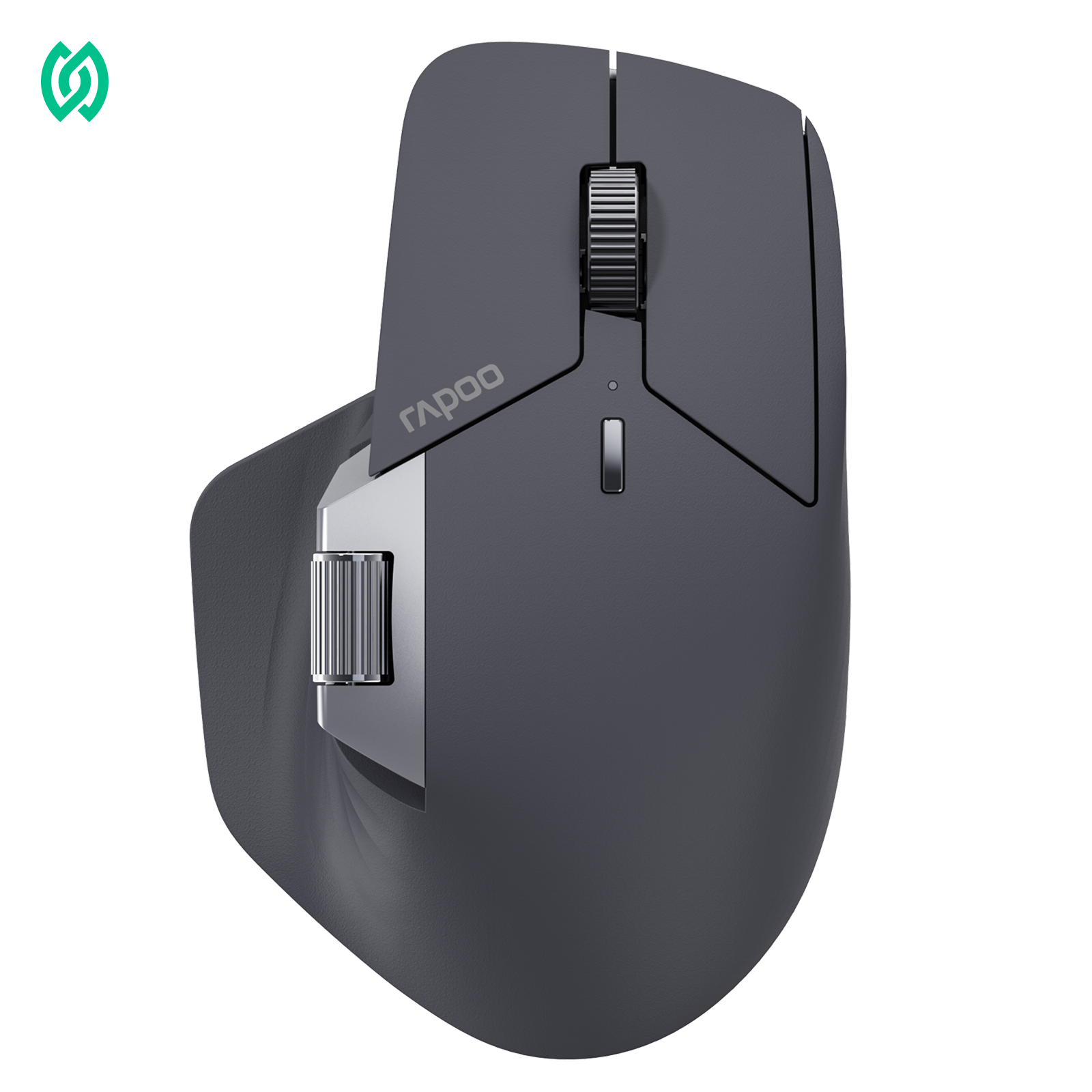


At first glance, the Rapoo VT2 Gen-2 and VT2 Max Gen-2 gaming mice look almost identical. They share the same lightweight shape, the same wireless platform, and the same design philosophy. In hand, they feel like the same mouse—and that’s intentional.
The question isn’t about size or comfort. It’s whether the added performance headroom of the VT2 Max Gen-2 fits your setup and play style—at $47.99 for the VT2 Gen-2 and $69.99 for the VT2 Max Gen-2.
From sensor headroom to click technology and latency tuning, the VT2 Max Gen-2 pushes the same foundation further. This guide isn’t about declaring one mouse “better.” It’s about deciding whether that extra headroom is worth paying for, based on how you play, how you tune, and what you actually use.
What Both Mice Have in Common
Although the VT2 Gen-2 and VT2 Max Gen-2 target different performance tiers, they are built on the same core platform. From shape and weight to wireless architecture and software, the foundation is identical—so the overall feel and daily usability remain consistent across both models.
| Feature | VT2 Gen-2 | VT2 Max Gen-2 |
|---|---|---|
| Shape | Medium-to-large symmetrical right-hand design | |
| Weight | ~53g (±3g, black version) | |
| Grip Styles | Palm / Claw / Fingertip | |
| Surface Coating | Skin-friendly anti-slip coating | |
| Wireless Algorithm | V+Wireless 2.0 (low-latency, anti-interference, long-range) | |
| MCU | Nordic 54 series | |
| Sensor Model | PixArt 3398 (custom-tuned, 3395-class) | PixArt 3950 Ultimate |
| Native DPI Range | 50–26,000 DPI | 10–30,000 DPI |
| Tracking Speed | 650 IPS | 750 IPS |
| Acceleration | 50G | |
| LOD Adjustment | 1.0–2.0mm (11 steps) | 0.7–1.7mm (11 steps) |
| Glass Surface Tracking | — | Supported |
| Main Switch Type | Mechanical (Omron) | Optical |
| Rated Click Lifespan | 100 million clicks | 120 million clicks |
| Click Feel | Crisp, tactile, traditional | Consistent, low-wear, stable |
| Scroll Encoder | TTC Gold Wheel (13mm height, 2M steps) | |
| Polling Rate | Native dual 8K support | |
| Button Scan Rate | Lower sustained | 8,000 Hz |
| Sensor Scan Rate | Up to ≥20,000 FPS (burst) | ≥20,000 FPS (sustained) |
| Wireless Click Latency | Slightly higher | ≤0.225 ms |
| Wired Click Latency | Slightly higher | ≤0.155 ms |
| Battery & Charging | 800mAh · Up to ~750h @1000Hz · Wired / Wireless / Contact | |
| Software | A Hub (Web + Local) · Windows / macOS · Onboard + Cloud | |
| Accessories | 99.95% PTFE skates · Shielded gold-plated braided 8K cable · Nano 8K receiver | |
| Price (MSRP) | $47.99 | $69.99 |
These shared fundamentals mean there’s no learning curve when switching between the two. Button placement, balance, weight distribution, and wireless behavior all feel familiar.
If you like how one feels in hand, you’ll feel right at home with the other.
Learn more: LOD Mouse Meaning: What Lift-Off Distance Means
Click Technology — Optical vs Mechanical

When comparing the VT2 Max Gen-2 and VT2 Gen-2, click technology is one of the most meaningful differences—often more important than raw sensor numbers. This isn’t about how fast a single click feels. It’s about how consistent every click remains over time, especially at high polling rates.
| Feature | VT2 Max Gen-2 | VT2 Gen-2 |
|---|---|---|
| Switch Type | Optical micro-switch | Mechanical micro-switch |
| Rated Lifespan | 120 million clicks | 100 million clicks |
| Actuation Method | Light-based (no physical contact) | Physical metal contact |
| Debounce Stability | Extremely consistent | Can vary as switches wear |
| High Polling Compatibility | Ideal for 4K–8K setups | Stable, but more tuning-sensitive |
| Click Feel | Clean, light, controlled | Crisp, tactile, traditional |
What This Means in Real Use
VT2 Max Gen-2 (Optical Switches) Optical switches eliminate physical contact inside the switch, which removes common wear points over time. This results in more predictable debounce behavior, even when running aggressive polling rates or ultra-low latency settings. For players who fine-tune click latency or play long sessions at 4K–8K polling, this consistency matters more than raw click speed.
VT2 Gen-2 (Mechanical Switches) Mechanical switches offer a familiar, tactile click that many players still prefer. The feedback feels sharper and more “mechanical,” which can help with rhythm-based clicking or players who value a distinct actuation point. While mechanical switches can require more debounce management as they age, they remain highly capable for competitive play.
Learn more: Optical vs Mechanical Mouse Switches Explained
Who Should Choose Which?
Choose VT2 Max Gen-2 if you:
- Run high polling rates (4K / 8K)
- Tune debounce and latency aggressively
- Prioritize long-term consistency over click feel
Choose VT2 Gen-2 if you:
- Prefer a crisp, traditional mechanical click
- Value tactile feedback for timing and control
- Want a proven, familiar click experience
Key takeaway: This isn’t about “faster clicks.” It’s about long-term consistency under high polling rates, where optical switches hold their behavior steady as settings and usage intensity increase.
Sensor Comparison — 3950 Ultimate vs 3398 Custom
Both mice use high-end PixArt optical sensors, but they target different performance ceilings. The VT2 Max Gen-2 pushes sensor capability further, while the VT2 Gen-2 focuses on proven, competition-ready stability.
| Feature | VT2 Max Gen-2 | VT2 Gen-2 |
|---|---|---|
| Sensor | PixArt 3950 Ultimate | PixArt 3398 (custom-tuned 3395 class) |
| Native DPI Range | 10–30,000 DPI | 50–26,000 DPI |
| Tracking Speed | 750 IPS | 650 IPS |
| Acceleration | 50G | 50G |
| LOD Adjustment | 0.7–1.7mm (11 steps) | 1.0–2.0mm (11 steps) |
| Glass Surface Tracking | Supported | Not designed for glass |
What the Difference Actually Means
With the PixArt 3950 in the VT2 Max Gen-2, the biggest advantage is headroom. It maintains tracking stability at extreme speeds and higher sensitivities, giving advanced players more margin when pushing aggressive settings. The sensor also handles a wider range of surfaces more reliably, including glass and ultra-smooth desks. Combined with a lower minimum lift-off distance—down to 0.7mm—this helps reduce unintended cursor movement during fast lift-offs and repositioning.
The PixArt 3398 in the VT2 Gen-2, however, is already more than sufficient for the vast majority of competitive players. On standard mouse pads, it delivers excellent consistency and predictable tracking across common DPI ranges. For most setups, the experience feels just as accurate and controlled. The difference between the two sensors tends to appear only at very high movement speeds, on unconventional surfaces, or when users actively tune their settings to the limit.
Who Actually Benefits from the 3950?
Choose the VT2 Max Gen-2 if you:
- Play at very high sensitivity or perform fast, wide flicks
- Use glass or ultra-smooth surfaces
- Tune LOD and sensor behavior aggressively
- Want maximum tracking headroom with no surface limitations
Choose the VT2 Gen-2 if you:
- Play FPS competitively on a standard mouse pad
- Stay within common DPI ranges
- Prioritize consistency over extreme edge cases
The 3950 Ultimate raises the performance ceiling and surface flexibility. The 3398 already sits well above what most competitive players will ever outgrow.
Polling Rate, Scan Rate & Latency — How Close to Wired?
Both mice are designed for modern high-refresh competitive setups, supporting native dual 8K polling and deep latency tuning. The difference lies in how consistently those limits can be sustained, not whether the feature exists.
What They Share
- Native dual 8K polling support
- Adjustable debounce (0–32ms) for click tuning
- Multiple performance modes to balance speed and power
In practice, this means both can be tuned for low-latency competitive play—and both can be dialed back for stability or battery life.
Performance Headroom Comparison
| Metric | VT2 Max Gen-2 | VT2 Gen-2 |
|---|---|---|
| Sensor Scan Rate | ≥20,000 FPS (sustained) | Up to ≥20,000 FPS (burst) |
| Button Scan Rate | 8,000 Hz | Lower sustained rate |
| Wireless Click Latency | ≤0.225 ms | Slightly higher |
| Wired Click Latency | ≤0.155 ms | Slightly higher |
| High-Polling Stability | Excellent | Very good |
What This Means
VT2 Max Gen-2
- Maintains higher scan and button rates more consistently, especially in sustained high-performance modes.
- Keeps latency predictable when running 4K–8K polling for long sessions.
- Best suited for players who tune aggressively and want the closest “wired-like” response in wireless.
VT2 Gen-2
- Reaches similar peaks, but relies more on burst behavior.
- In sustained high-load scenarios, scan rates step down slightly to maintain stability.
- Still extremely responsive—and for most players, already indistinguishable from wired.
Diminishing Returns—Who Can Actually Feel It?
The latency gap here is small by design. Most players won’t notice a difference unless they fall into specific use cases:
Likely to notice:
- CS2 / VALORANT players
- 240Hz–360Hz+ monitors
- 4K–8K polling users with aggressive debounce tuning
Unlikely to notice:
- 144Hz setups
- Mixed gaming and daily use
- Lower polling or default profiles
Both mice feel fast. The VT2 Max Gen-2 simply holds that speed more consistently at the extreme end, making it the closer wireless equivalent to a tuned wired mouse.
Performance Modes & Power Control
Both the VT2 Gen-2 and VT2 Max Gen-2 use the same VT Gen-2 performance framework, offering multiple modes that balance speed, stability, and power consumption. The difference isn’t complexity—it’s how much headroom each mode provides.
Performance Mode Philosophy
| Aspect | VT2 Max Gen-2 | VT2 Gen-2 |
|---|---|---|
| Mode Structure | Same multi-mode system | Same |
| Granularity | More fine-grained tiers | Slightly broader steps |
| Sustained Performance | Higher scan rates under load | Slightly lower ceiling |
| Target User | Advanced tuners, enthusiasts | Competitive players who prefer simplicity |
VT2 Max Gen-2: More Headroom, Not More Hassle
The VT2 Max Gen-2 adds higher sustained scan-rate modes designed for users who push polling, debounce, and latency settings aggressively. These modes keep performance stable even under long sessions at high polling rates.
Importantly, this doesn’t mean you have to tune everything manually. The default competitive profiles already deliver top-tier performance, and advanced modes are there only if you want to go further.
VT2 Gen-2: Set It Once, Play
The VT2 Gen-2 follows the same performance logic but with a slightly lower upper ceiling. Its modes are optimized to deliver consistent, high-level performance without requiring frequent adjustments—making it easier to set up and forget.
For many players, especially those running standard competitive settings, the experience feels just as fast and responsive.
Clearing the “MAX = Complicated” Myth
- Same software, same layout, same defaults
- Advanced modes are optional—not required
- You can match VT2 Max behavior to VT2 Gen-2 with one click
VT2 Max Gen-2 gives you more room to push performance, while VT2 Gen-2 gives you the same experience with fewer decisions. Neither forces complexity—the choice is about how much control you want.
Battery Life & Charging — Surprisingly Similar
Despite the difference in performance headroom—and the price gap between the two models—battery life remains surprisingly similar.
Both the VT2 Gen-2 ($47.99) and VT2 Max Gen-2 ($69.99) are built around the same power foundation, using identical battery capacity and charging architecture.
Power & Charging Comparison
| Feature | VT2 Max Gen-2 | VT2 Gen-2 |
|---|---|---|
| Battery Capacity | 800mAh built-in | Same |
| Battery Life (1000Hz) | Up to ~750 hours | Same |
| Charging Methods | Wired / Wireless / Contact | Same |
| Charging Ecosystem | Modular magnetic base | Same |
| Optional Accessories | Wireless & contact charging modules | Same |
High-performance modes on the VT2 Max Gen-2 naturally consume more power when pushed to their limits, but at common competitive settings—such as 1000Hz polling—real-world battery life is effectively identical.
This design allows players to choose between the two without worrying about daily charging habits or battery trade-offs.
Choosing MAX does not mean sacrificing battery life.
Which One Should You Choose?

At this point, the decision isn’t about shape, weight, or wireless quality—because both mice are identical in those areas. The choice comes down to how far you want to push performance and how much tuning you actually plan to use.
Choose VT2 Max Gen-2 if:
- You play competitive FPS seriously (CS2, VALORANT, similar titles)
- You run high polling rates (4K / 8K) and want maximum stability
- You prefer optical switches for long-term consistency
- You use glass or ultra-smooth surfaces
- You care about ultra-low latency tuning and sustained performance headroom
- You want the most future-proof version of the VT Gen-2 platform (Price: $69.99)

Rapoo VT2 Max Gen-2 Wireless Gaming Mouse
Same VT2 Gen-2 shape • Higher performance headroom • Optical click consistency
- TrackingHigher headroom for fast flicks and aggressive sensitivity
- ClicksOptical switches for long-term consistency at high polling rates
- SurfaceReliable tracking on pads, glass, and ultra-smooth desks
- Lift-OffLower LOD options to reduce unwanted cursor movement
Extra savings available — use code RAPOOBg10 at checkout.
If you’re running 4K/8K polling or want optical click consistency, VT2 Max Gen-2 is the “same feel, higher ceiling” pick.
Choose VT2 Gen-2 if:
- You want flagship-level performance without over-tuning
- You prefer a crisp mechanical click feel
- You play competitively but value a set-and-forget experience
- You mainly use standard mouse pads
- You want excellent value within the VT Gen-2 platform (Price: $47.99)

Rapoo VT2 Gen-2 Wireless Gaming Mouse
Flagship VT2 Gen-2 feel • No over-tuning required • Excellent value
- FeelSame lightweight VT2 Gen-2 shape used across the series
- ClicksMechanical switches with a familiar, crisp tactile response
- TrackingMore than enough performance for competitive FPS play
- SetupSimple tuning that works great out of the box
- SurfaceOptimized for standard mouse pads and desk mats
Extra savings available — use code RAPOOBg10 at checkout.
If you want flagship feel and competitive performance without chasing maximum specs, VT2 Gen-2 is the smart, no-regrets choice.
If you enjoy tuning and want every possible performance margin, VT2 Max Gen-2 makes sense. If you want elite performance with fewer decisions, VT2 Gen-2 already delivers more than most players will ever need.
Same Mouse, Different Performance Ceiling
The VT2 Gen-2 and VT2 Max Gen-2 are built on the same foundation. They feel the same in hand, share the same wireless platform, and deliver the same core experience. The difference is how much performance headroom you want access to.
The VT2 Gen-2 already sits at a flagship level. For most competitive players, it provides everything needed—excellent tracking, low latency, familiar mechanical clicks, and a simple setup at a strong value.
The VT2 Max Gen-2 exists for players who want more control and more margin. Optical switches, higher sustained scan rates, glass compatibility, and tighter latency behavior make sense if you actively run high polling rates or fine-tune your setup.
In short:
- VT2 Gen-2 is already elite.
- VT2 Max Gen-2 is for those who want no compromises.
Both are competitive. The right choice depends on whether you want maximum simplicity or maximum headroom—not on which mouse “looks better,” because they’re the same mouse to begin with.
Learn more about gaming mice: