




Keyboard Guides

75% Keyboard Guide: Layout, Key Count, and How to Choose
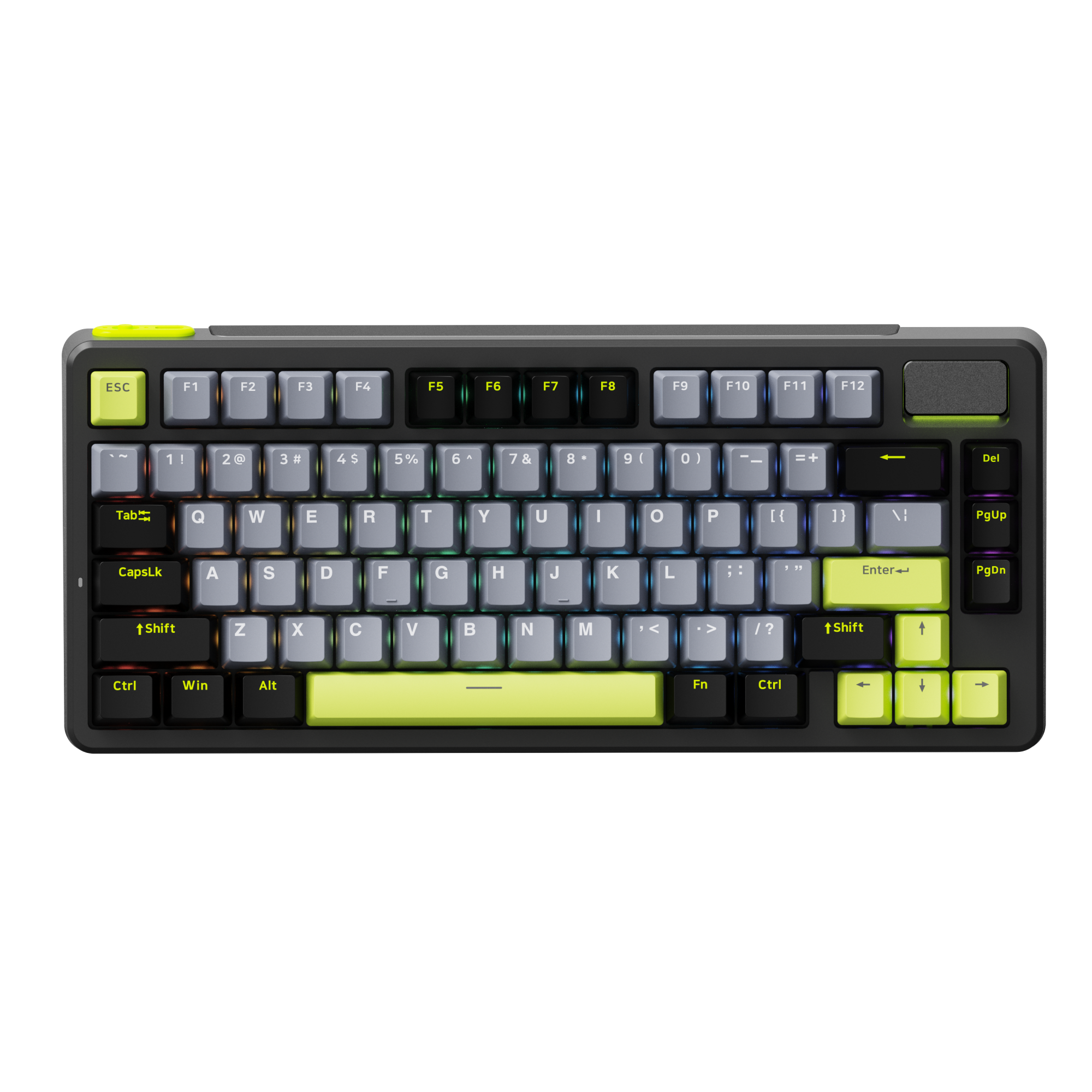
If you've been shopping for a new mechanical keyboard lately, chances are you’ve come across the term 75 keyboard or 75 percent keyboard more than once. And for good reason — this compact-but-functional layout has quickly become one of the most popular choices among gamers, office users, and custom keyboard enthusiasts in 2025. But what exactly makes a 75% keyboard so special? How does it differ from a tenkeyless or a 60% keyboard, and why might it be the perfect fit for your desk setup? In this guide, we’ll break down everything you need to know — from layout and key count to choosing the right one for your workflow — so you can decide if this increasingly popular keyboard layout is the right choice for you. 1. What Is a 75% Keyboard? A 75% keyboard strikes a rare balance: it saves valuable desk space without sacrificing the essential keys you rely on every day. You still get the full F-row, dedicated arrow keys, and key functions that smaller layouts—like 60% or even 65%—often remove. The result is a keyboard that feels minimal, but never limiting. In one sentence: A 75 keyboard is a compact mechanical keyboard that keeps the function row and arrow keys while removing the number pad and extra navigation keys. 2. 75% Keyboard Layout Explained When people talk about a 75 keyboard layout, they’re usually referring to a compact mechanical keyboard that keeps all the keys you actually use—while removing the bulky extras that most people never touch. It’s one of the most efficient and intuitive layouts available today. A typical 75% layout includes: Full F1–F12 function row Dedicated arrow keys A tight cluster of navigation keys (like Delete, Home, PgUp, PgDn — depending on the design) No numpad, which helps significantly reduce the overall footprint A vertically stacked layout that feels more “condensed” than a TKL The keys are arranged closer together, giving the keyboard a clean, modern look while maintaining all essential functionality. Typical Dimensions of a 75% Keyboard While the exact dimensions of a keyboard can vary by brand or design, most 75% keyboards fall within a similar size range: Width: 310–330 mm (12.2–13 in) Depth: 130–145 mm (5.1–5.7 in) Height: 30–40 mm (1.18–1.57 in) Weight: 500–850 g (depending on materials) This makes the 75% layout significantly more compact than a TKL while still being instantly familiar to type on. Why 75% Is the “Sweet Spot” Between Compact and Functional Many users feel that 75% hits the perfect middle ground: More functional than a 60% or 65% keyboard, because it keeps the F-row and the full arrow cluster More compact and portable than a TKL, freeing up desk space for mouse movement Ideal for gaming, hybrid work, and clean desk setups Still compatible with mainstream keycap sets and switch layouts In short: 75% keyboards deliver everything most people actually need, without the added bulk. Layout & Dimension Comparison Table Below is a clean visual comparison of popular layouts. Layout Keys Function Row Arrow Keys Numpad Typical Dimensions 60% 61–64 ❌ No ❌ No (usually layer only) ❌ No ~290 × 100 mm 65% 67–68 ❌ No ✔️ Yes ❌ No ~310 × 110 mm 75% 79–84 ✔️ Yes ✔️ Yes ❌ No ~320 × 135 mm TKL (Tenkeyless) 87 ✔️ Yes ✔️ Yes ❌ No ~360 × 140 mm 3. How Many Keys Does a 75% Keyboard Have? A common question people ask is: “How many keys are on a 75% keyboard?” The answer is that while the “75” refers to the layout percentage—not the number of keys—a typical 75% keyboard includes anywhere from 79 to 87 keys, depending on the design. The most common configuration on the market is 84 keys, which strikes an ideal balance between compactness and full functionality. This layout keeps the F1–F12 function row, arrow keys, and navigation keys, but removes the numpad to save desk space. More compact versions of the layout may feature 79–82 keys, as manufacturers often condense the navigation cluster or eliminate duplicated keys. For example, the Rapoo V700DIY-75 features 79 keys, offering a streamlined take on the 75% layout without sacrificing essential functionality. Rapoo V700DIY-75 Mechanical Keyboard (79-key Layout) In short: 75% keyboards typically have 79–87 keys, with 84 keys being the most common and compact designs falling around 79–82 keys. 4. 75% Keyboard vs TKL: Detailed Comparison When people compare compact keyboards, one of the most common matchups is TKL vs 75 keyboard. Both layouts remove the numpad to save desk space, but they approach the design differently — and those differences matter depending on how you use your keyboard. What Is a TKL Keyboard? A TKL (Tenkeyless) keyboard typically features 87 keys, including a full function row, dedicated arrow keys, and a complete navigation cluster. It’s essentially a full-size keyboard without the numpad, offering a comfortable layout with plenty of breathing room between key groups. 75% vs TKL Comparison Table Feature 75% Keyboard TKL Keyboard (Tenkeyless) Keys 79–84 87 Size Smaller, compact Wider, traditional Function Row ✔️ Yes ✔️ Yes Arrow Keys ✔️ Yes ✔️ Yes Numpad ❌ No ❌ No Best For Small desks, gaming, minimal setups Typing comfort, office work, traditional layout fans Size & Space: How Do They Compare? The biggest difference is footprint. A 75% keyboard is noticeably more compact, thanks to its tighter key spacing and vertically stacked navigation cluster. A TKL keeps the traditional spacing, making it slightly wider and better suited for users who prefer a familiar layout. 75%: Ideal for limited desk space or large mousepads TKL: Better for users who prefer a roomier, more traditional feel Layout Differences While both layouts include the essentials — F-row, arrow keys, and navigation keys — the arrangement is different: 75% places keys closer together for a modern, condensed look TKL maintains gaps between sections, which some users find more comfortable for long typing sessions Use Case: Which One Fits You Better? Gamers often prefer 75% because it frees up more mouse space Programmers may appreciate the tighter layout or the traditional spacing of a TKL depending on their habits Office users who type for long hours might prefer the more relaxed spacing of a TKL Minimalist or small-desk setups almost always benefit from a 75% keyboard In short: 👉 Choose a 75% if you want maximum space efficiency. 👉 Choose a TKL if comfort and familiarity matter more. 5. Key Benefits of Using a 75% Keyboard The growing popularity of 75% keyboards isn’t a coincidence — the layout offers a long list of practical advantages that appeal to gamers, office professionals, and keyboard enthusiasts alike. Here are the biggest reasons why many users consider the 75% footprint the perfect modern keyboard size. More Desk Space, Less Clutter A 75% keyboard frees up valuable room on your desk without sacrificing essential keys. The tighter layout means more space for your mouse, your notebook, or simply a cleaner, more minimalist workspace. This is especially helpful for gamers who need wide mouse movement or anyone working with limited desk depth. Essential Functions Fully Preserved Despite being compact, a 75% layout keeps everything you actually use daily: Full F1–F12 function row Arrow keys Navigation keys (in a compact cluster) You get all the functionality of a TKL—just in a more efficient format. Perfect for Gaming, Office Work, and Travel A 75% keyboard delivers the versatility modern users need: Gaming: More mouse space, less arm strain Office work: Full functionality without a bulky footprint Travel: Small enough to pack in a backpack or laptop bag It’s the kind of keyboard you can take anywhere without feeling like you’ve compromised on usability. Lightweight and Easy to Carry Because the layout eliminates extra rows and gaps, most 75% keyboards weigh significantly less than TKL or full-size boards. This makes them ideal for hybrid work setups or users who switch between home and office. A Favorite Among Custom Keyboard Enthusiasts In the custom keyboard world, the 75% size has become a modern standard: Frequently comes in hot-swappable designs Compatible with popular keycap profiles Offers a compact footprint while still leaving room for customization The layout hits the sweet spot between creativity and practicality, making it a top choice for modders and DIY builders. 6. How to Choose the Right 75% Keyboard Choosing the perfect 75% keyboard can be tricky, given the variety of options available today. Whether you’re a gamer, programmer, or office professional, a few key factors can help you pick the right keyboard that balances compact design with functionality. 1. Wireless or Wired? One of the first decisions is whether you need wireless connectivity. Wireless (Bluetooth / 2.4GHz): Ideal for clean, minimalist setups or multi-device use. Perfect for people who frequently switch between laptops, tablets, or PCs. Wired: Offers the most stable connection with zero latency, favored by competitive gamers. Some keyboards, like the Rapoo V700DIY-75, provide tri-mode connection (Bluetooth, 2.4GHz, and wired), offering the best of both worlds. 💡 Tip: If desk clutter is a concern or you want to connect multiple devices easily, prioritize a tri-mode wireless keyboard. 2. Hot-Swappable Switches For enthusiasts or users who like customization, hot-swappable switches are a must. They allow you to swap switches without soldering, so you can try different tactile or linear switches to match your typing or gaming style. Even office users may benefit, as hot-swappable keyboards let you experiment with quieter or smoother switches for better ergonomics. Example: The V700DIY-75 supports hot-swappable Speed Silver switches, letting users customize feel and sound effortlessly. 3. Keycap Material: ABS vs PBT Keycaps greatly affect both feel and durability: ABS Keycaps: Lightweight and smooth, but prone to shine over time. PBT Keycaps: More durable, resistant to wear and fading, often providing a crisper, more satisfying typing experience. For a long-lasting keyboard experience, especially on a 75% keyboard where every key matters, PBT keycaps are generally recommended. 4. RGB Lighting: Do You Need It? RGB backlighting is more than just aesthetics; it can improve visibility in low-light conditions. Gamers: Can use lighting layers for key mapping, macros, or simply for style. Office users: RGB may not be essential but can add a subtle glow for night work. Pro Tip: Some keyboards offer per-key RGB customization, giving you the flexibility to create profiles for work and play without compromising desk aesthetics. 5. Choosing Based on Use Case Finally, consider your primary use: User Type What to Prioritize Recommended Features Gamer Low latency, compact layout, hot-swappable switches Tri-mode wireless, fast linear switches, per-key RGB Programmer Function row accessibility, arrow/navigation keys, typing comfort Hot-swappable or tactile switches, PBT keycaps Office / Remote Work Quiet typing, ergonomics, minimal footprint Compact layout, PBT keycaps, optional RGB By evaluating these factors, you can pick a 75% keyboard that’s tailored to your needs, whether it’s for high-speed gaming, efficient coding, or daily office work. 7. FAQs About 75% Keyboards (Updated) What exactly is a 75% keyboard? A 75% keyboard is a compact mechanical layout that condenses a full-size or TKL keyboard into roughly 75% of the space. It retains F1–F12 function keys, arrow keys, and a condensed navigation cluster while removing the numpad. This makes it a perfect balance between functionality and compact design. How many keys does a 75% keyboard usually have? Most 75% keyboards include 79–84 keys, depending on brand and layout design. Some add extra media or macro keys. For example, the Rapoo V700DIY-75 has 79 keys, providing a true 75% layout with full F-row and arrow keys. How many switches are on a 75% keyboard? Since each key has its own mechanical switch, a 75% keyboard typically has the same number of switches as keys—so usually 79–84 switches. Some models, like the V700DIY-75, include hot-swappable Speed Silver switches, giving you the flexibility to replace or upgrade switches without soldering. How many keys are on a Tenkeyless (TKL) keyboard? A TKL keyboard usually has 87–88 keys. It keeps the F-row, arrow keys, and navigation keys but removes the numpad. This layout is slightly larger than a 75% keyboard, making it a good choice if you want a full function cluster while saving desk space. Is a 75% keyboard suitable for gaming? Absolutely. The compact footprint provides more mouse movement, dedicated arrow keys are handy for game controls, and optional per-key RGB lighting can help highlight essential keys. Many hot-swappable 75% keyboards, like the V700DIY-75, are designed for fast response and long gaming sessions. Are 75% keyboards good for office or programming? Yes. They retain function keys and arrow/navigation keys, making them ideal for coding, spreadsheet work, or multitasking. Plus, their compact size keeps desks neat, especially in small office spaces. Should I choose wireless or wired for a 75% keyboard? It depends on your needs: Wireless: Cleaner setup, multi-device connectivity, and portability. Wired: Stable, zero-latency connection, ideal for competitive gaming. Some keyboards, like the Rapoo V700DIY-75, offer tri-mode connectivity, giving you the best of both worlds. Are 75% keyboards easy to customize? Yes! Many modern 75% keyboards feature hot-swappable switches, compatible keycaps, and customizable RGB. This allows you to tweak the feel, sound, and aesthetics to match your preferences without soldering or complicated mods.
Read more


